Ebook, PDF and EPUB, about 280 pages
53 agent skills worth installing, already tested in Claude Code and Codex
Thousands of skills sit on GitHub. The Claude Code & Codex Skills Guidebook picks the ones worth your time, runs each in both tools, and tells you in one table whether it fits your work before you install anything.
The book for $29, or the book plus 20 ready-to-install skills, 6 subagents, and a six-role ops team for $59.
Why pay for something you could piece together for free?
You could. Most of these skills are on GitHub, and the original Korean edition of this book is free to read online. What you would be missing is the sorting.
A skill's README rarely says who it is for. Finding out means installing it, running it, and cleaning up when it does not fit. That costs an afternoon per skill and leaves your skills folder cluttered.
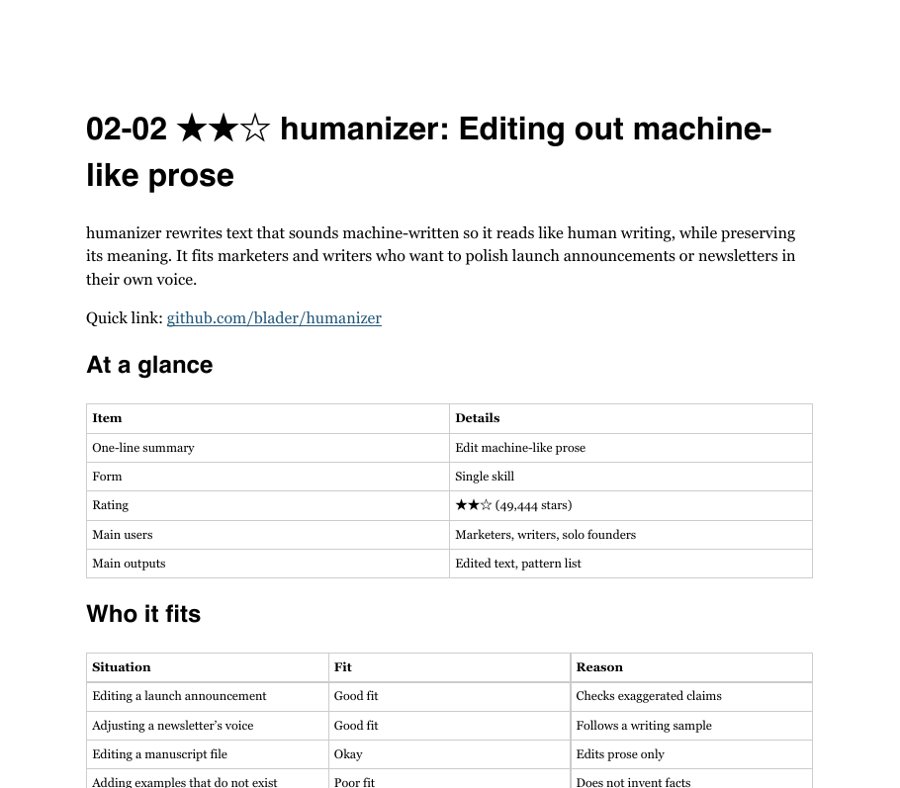
This book has already done that work. Every skill was installed and run in both Claude Code and Codex, and every chapter follows the same layout, so you can compare skills side by side and decide in minutes.
What every skill chapter gives you
Same five parts, same order, in all 53 chapters.
- Who it fits. Situations rated good fit, okay, or poor fit, with a reason for each.
- Install. The commands for Claude Code and for Codex.
- First run. What to type and what the skill does step by step.
- What makes it useful, and what to watch out for. Limits, risks, and what it will not do.
- Sources. Repository, license, and the files the chapter quotes.
Is it for you?
Good fit
- You have bookmarked more skill repos than you have tried, and want to know which ones are worth an install.
- You use Claude Code or Codex and repeat the same instructions every session.
- You are a developer, indie hacker, or solo founder looking for skills that pay off this week.
- You switch between both tools and want one skill folder that works in each.
Not a fit
- You want a general prompt-writing guide.
- You need install help for plans and billing of the two products.
- You only use chat apps and never open a terminal.
The 53 skills
Grouped by the work you do. A roadmap chapter pairs them by role: planning, design, development, marketing, operations, and research.
Part 01 Business
pm-skillsProduct planning methodsdistillyTurn a person's approach into a skillwondelai/skillsFrameworks from business booksyc-office-hoursA business mentor who asks before you buildresearchResearch into a document with sourcesflow-mapFlowcharts as dated snapshotsmeeting-agendaAgendas that force options and deadlines
Part 02 Marketing
marketingskillsPractical marketing skillshumanizerEdit machine-like proseclaude-adsAudit ad accountsblog-postA production cycle for one postblog-topic-judgeScore blog topics on five axestechnical-writerWriting steps by document typecard-newsA card deck from one JSON file
Part 03 Data analysis
last30days-skillSummarize recent reactionsnature-skillsCheck figures and statistics for submissionnotebooklm-pyControl NotebookLM with commandsinsane-searchRead blocked public pagesapps-script-collectorDaily market prices into a sheet
Part 04 Design
archifyValidated architecture diagramsdiagram-design44 diagram types in brand colorshuashu-designDesign outputs in HTMLarchitecture-drawio-diagramArchitecture diagrams with large logoslecture-slide-makeEditable lecture decks from one JSON filelecture-slidesA deck workflow for recorded lectures and seminarsnotebooklm-slidesImage decks from a spec
Part 05 Development
superpowersFrom design through mergeagent-skillsProcedures for each dev stagen8n-skillsKnowledge for n8n workflowsn8n-routePick the instance, enforce build rulesn8n-workflow-builderWorkflow design and final checksn8n-debuggerTrace failures and prevent repeats
Part 06 Operations
obsidian-skillsWork in an Obsidian vaultgmail-searchFind email four waysemail-draftGmail drafts with your signatureadd-launchd-jobSix steps to a launchd jobnew-projectCheck names, then create a foldermarkdown-to-pdfMarkdown to PDFaside-browserEntry point for Aside CLI
Part 07 Working with agents
i-have-adhdAction first, numbered stepsgrillingTest plans with questionsplanPlan, cross-review, wait for approvalplanning-with-filesPlans that survive interruptionssession-wrapCommit and hand off before you stopskill-creatorWrite and evaluate skillsskill-recorderTurn recorded work into a skillSkillSpectorSecurity check before install
Part 08 Vibe coding
gstackDevelopment commands by roletaste-skillRules against generic screensponytailRules for writing less codeui-ux-pro-maxIndustry-specific design rulesUnderstand-AnythingA knowledge graph of your codebaseopen-code-reviewReview changed code automatically
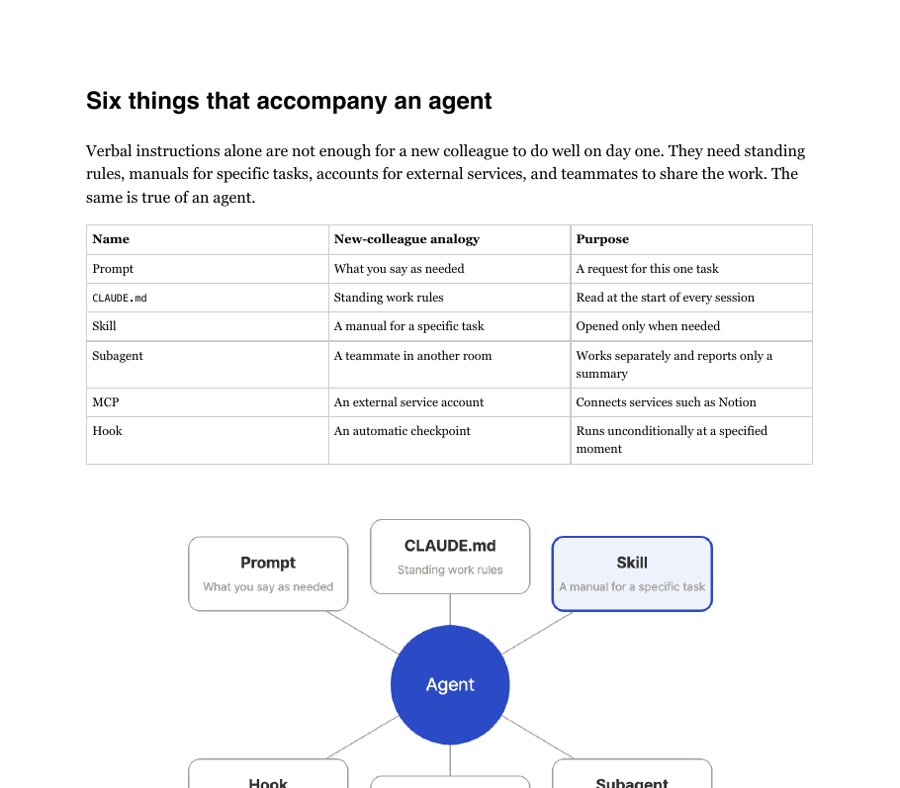
Plus foundation chapters: what agents, skills, subagents, MCP, and hooks are; how each tool finds and loads a SKILL.md; the spec differences; and how to share one skill folder between both tools.

About the author
14 months using Claudeabout $1,100 (₩1.5M) paid to Claude out of pocket6,275 Claude Code sessions1,577 hours of active work1,048 Codex sessions20+ organizations trained since 2023
Usage figures from the author's Claude and Codex logs, as of October 2026.
Jay Jung Lim is the founder of BuildnWrite, and an AI agent coach based in Seoul. Since 2023 Jay has trained teams at more than 20 organizations and coauthored n8n Does It All (Hanbit Media, 2026). This book is the shortlist Jay wished existed: 70 skills in daily use, more than 6,000 Claude sessions and 1,000 Codex sessions behind it.
Questions
- Isn't this information free on GitHub?
- Many of the skills are, and the Korean edition of this book is free to read online. What you pay for is the sorting: 53 skills picked out of thousands, each run in both tools, each written up in the same layout so you can decide quickly. The English edition also comes as a PDF and EPUB you can keep.
- Do I get updates?
- Yes, for 12 months from purchase. New editions of the book and the Skill Pack are added to your Gumroad library at no cost. Both tools change fast, and both are revised as they do.
- What is in the Skill Pack?
- 20 skills from the author's daily work, 6 subagents, and a six-role one-person operations team, cleaned of personal settings, with an installer that copies them into Claude Code and links them into Codex. Licensed for your own and your organization's internal use.
- How does the setup call work?
- After purchase you get a short questionnaire by email. We meet for 60 minutes on Zoom or Google Meet; I am in Seoul (UTC+9), and Seoul mornings line up with US evenings. Afterwards you receive a Claude Code Setup Blueprint (PDF).
- What formats do I get?
- PDF and EPUB, about 280 pages. Read them on a laptop, tablet, or e-reader.
- Do I need to know how to code?
- No. You need Claude Code or Codex installed and you need to paste commands into a terminal. If you have never installed either tool, the chapter "Getting started with Claude Code and Codex" walks you through it.
- Which versions does it cover?
- Claude Code v2.1.273 and Codex v0.153.4, on macOS. On Windows, the same commands work in WSL2.
- Can I get a refund?
- For the book and the book + Skill Pack, email contact@buildnwrite.com within 30 days of purchase for a full refund. The setup call is fully refundable any time before the call; the Blueprint made after it is custom work and is not refundable.
- Is this an official Anthropic or OpenAI book?
- No. It is an independent guide by BuildnWrite. Product names belong to their owners.
Choose your package
All packages include the full book in PDF and EPUB, about 280 pages.
The book
$29
- 53 skill chapters and the foundation chapters
- 12 months of free updates
- 30-day refund
Most useful
Book + Author's Skill Pack
$59
- Everything in the book
- 20 ready-to-install skills, 6 subagents, and a six-role ops team from the author's daily work
- One installer for Claude Code and Codex
- 12 months of free updates to the book and the pack
- 30-day refund
Setup consulting
$199
- Everything in Book + Pack
- 60-minute call about your work
- A Claude Code Setup Blueprint (PDF) you can paste into Claude Code
- Full refund any time before the call
Not ready? Read the free sample.
Not ready to buy?
Get the free 10-minute checklist for sharing one SKILL.md across Claude Code and Codex. You will also hear when new chapters and editions come out.